Skip to content

Random team generator

Paste the players’ names and get the teams already split evenly.

10 entries

Type or paste a whole list. Blank lines are ignored.

Saved in this browser only. Nothing is uploaded.

Split by

10 players → 2 teams

10 players · 2 teams

Guide and details

Paste the players and choose how to split. The list is shuffled with the browser’s crypto generator, then dealt out evenly.
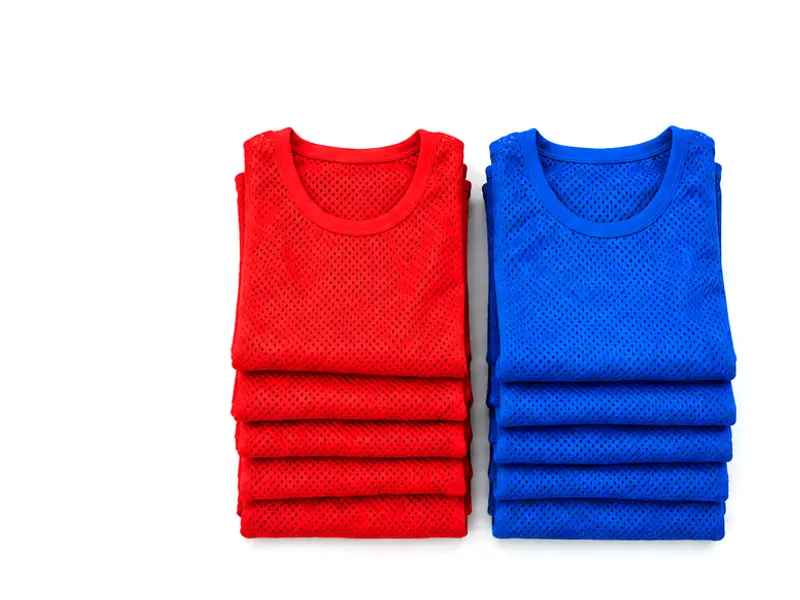
Two piles of folded training bibs, one red and one blue, on a white surface

Two ways to split

Choose “Number of teams” when the pitch decides it: two sides, four relay teams. Choose “Players per team” when the activity does: groups of three for a lab, pairs for a workshop. The line under the field tells you how many teams the current list will produce before you draw.

With players per team, a remainder never becomes a one-person team. Ten players in teams of three makes four teams, of 3, 3, 2 and 2.

How the split is made

The whole list is shuffled with the Fisher–Yates method, using numbers from the browser’s cryptographic generator, and the shuffled players are dealt to the teams in turn like cards. Every ordering of the list is equally likely, so every player has the same chance of landing on any team and beside any other player.

The common shortcut of sorting a list with a random comparison does not have that property: it leaves some players more likely to stay near where they started. That shortcut is not used here.

What it will not do for you

The split knows nothing about skill, age or who gets along. If you need two captains, draw them first with the name picker and take them out of the list. To decide which team kicks off, flip a coin.

Why use Choose Tools

  • One source of randomness

    Every draw calls crypto.getRandomValues and throws away the values that would cause modulo bias. A test fails if Math.random ever appears in the source.

  • The result comes first

    The wheel, the coin and the dice pick the outcome before they move. The animation always has the same length and only shows what was drawn.

  • A receipt you can recompute

    Wheel and name-picker winners are derived from a 256-bit seed with SHA-256. The Verify page repeats the calculation and compares.

  • Lists stay on your device

    They are kept in local storage. Shared links carry the list after the #, which browsers do not send to servers. There is no account.

  • Quiet by default

    Sound is off until you turn it on, and with “reduce motion” set in your system the result appears with no animation.

Questions and answers

What happens when the players do not divide evenly?

Nobody is left out. Players are dealt one at a time in turn, so the first teams get one extra player. Ten players in three teams gives 4, 3 and 3.

Are the teams balanced by skill?

No, the split is purely random. For a rough balance, split the strongest players first with the number of teams you want, then run the rest and merge the two results team by team.

Can I keep two people on different teams?

There is no rule for that. Shuffle again until the split suits you, or place those two by hand and split the others.

Do team draws have a receipt?

No. Receipts exist for the wheel and the name picker, where one list produces winners. A team split uses the same cryptographic shuffle but is not recorded.